

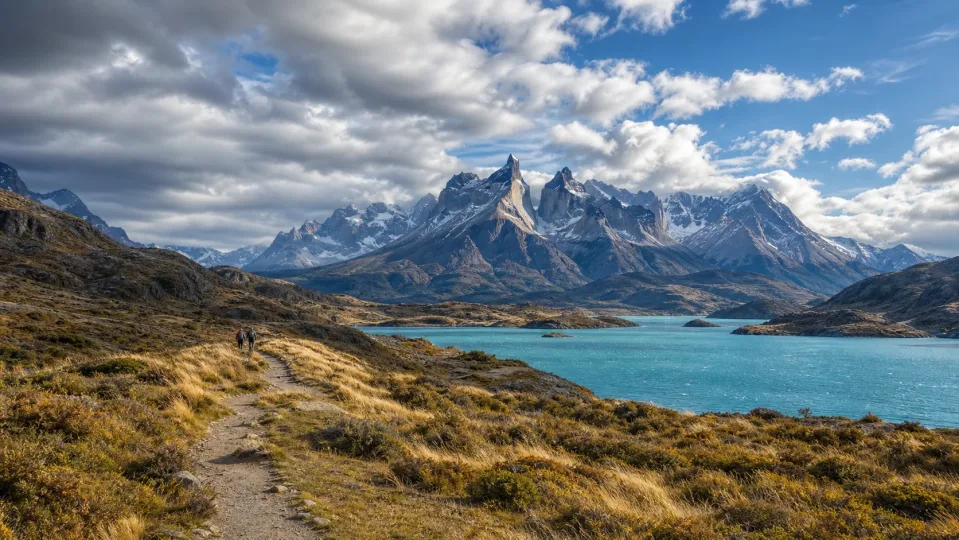
How to Plan a Low-Impact Hiking Trip in Patagonia
A practical framework for routes, weather, transport and Leave No Trace choices on a first hiking journey through Patagonia.
Patagonia covers an enormous area across Chile and Argentina. Planning well is less about fitting every landmark into one trip and more about choosing a single region, allowing for weather and understanding the limits of local transport and park infrastructure.
Start with a region, then choose the trail
Torres del Paine, El Chaltén, northern Patagonia and Tierra del Fuego all require different logistics. Pick one main area based on season, hiking experience and transport, then compare official park information before booking flights or accommodation.
Build a weather buffer
Strong wind, rain and rapid temperature changes are normal. Add at least one flexible day around any priority hike and carry layers that work together: a wicking base, insulation and a reliable waterproof shell. A forecast is guidance, not a guarantee.
Reduce the footprint of the journey
- Use scheduled buses and shared transfers instead of unnecessary private journeys.
- Stay on established trails, even when a shortcut is visible.
- Pack out all waste, including food scraps and tissues.
- Use designated campsites and follow current cooking restrictions.
- Keep distance from wildlife and never use food to attract an animal.
Prepare for limited connectivity
Download offline maps, share your route and expected return time, and carry an appropriate emergency plan. On remote routes, a satellite communicator can add safety but does not replace conservative decisions.
Book only what must be fixed
Popular campsites and refugios may require advance reservations, while day hikes often benefit from flexibility. Confirm official requirements, avoid unofficial trail advice that conflicts with park rules and leave a realistic margin between long-distance connections.
A lower-impact Patagonia trip usually covers less ground. The reward is more time on foot, fewer rushed transfers and a better chance to experience the landscape on its own terms.

Postly Travel Editorial Team
- Independent travel editors focused on useful context, practical planning and responsible journeys.
We create internationally relevant travel stories that combine inspiring places with honest logistics, cultural awareness and lower-impact choices.